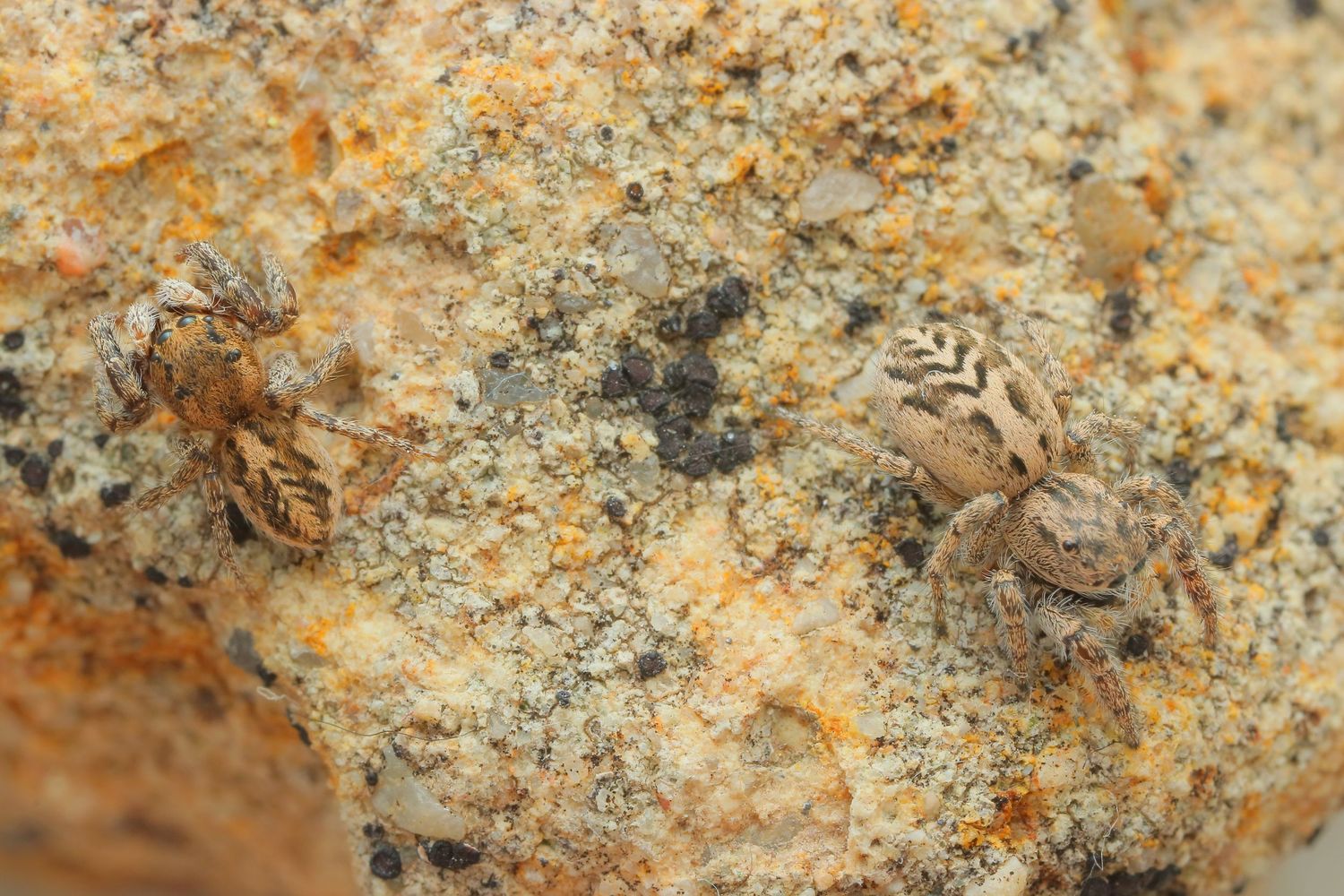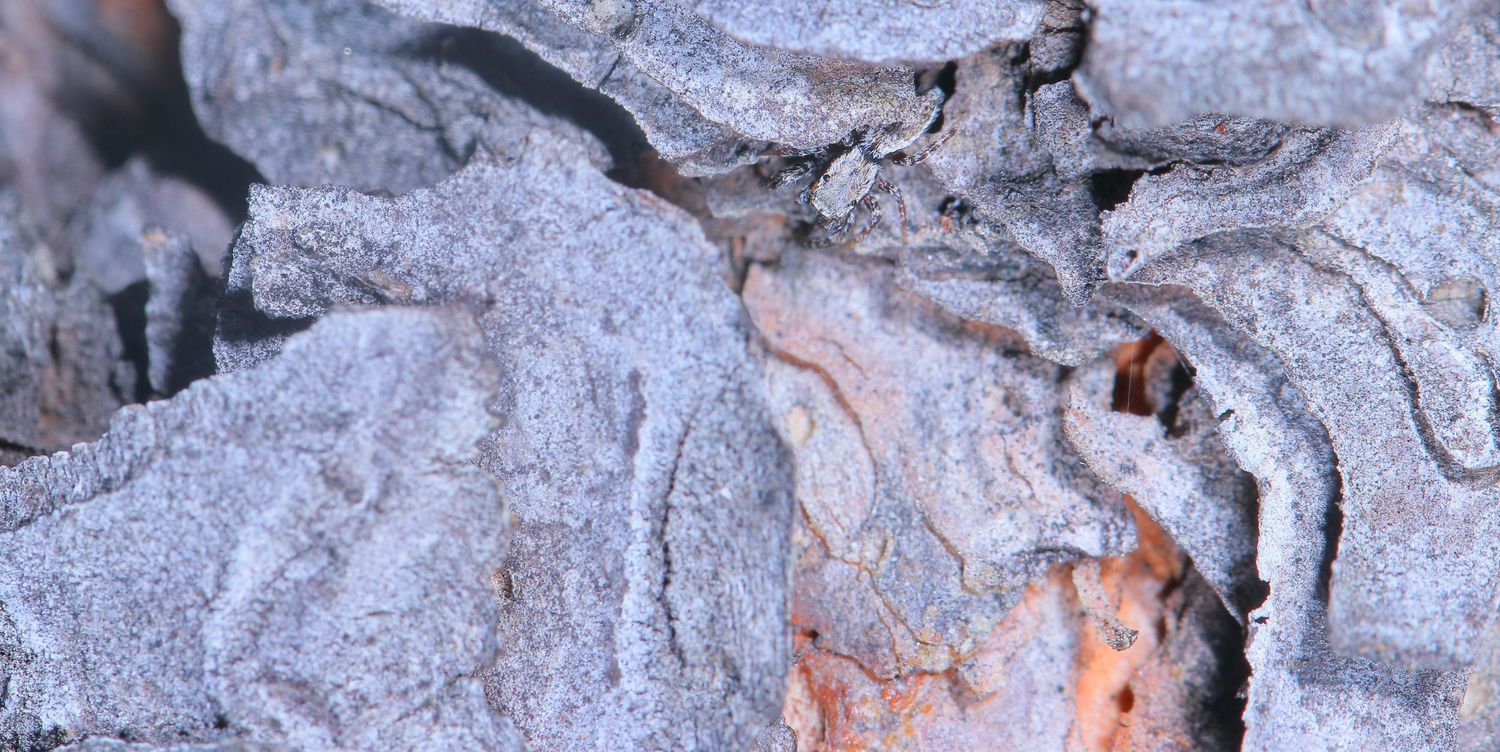
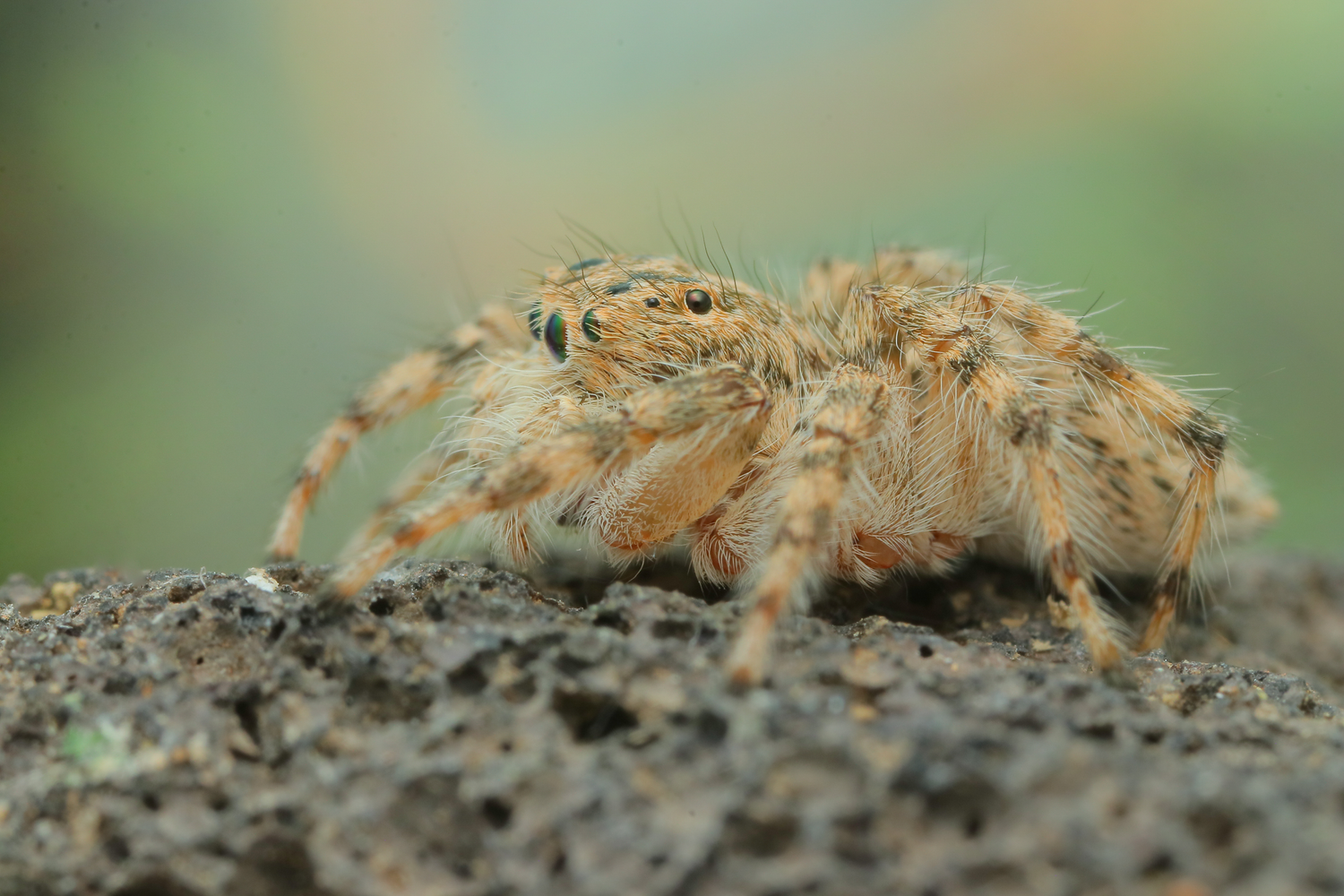
Most of the jumping spiders we see in urban environments weren't always there. Human-made environments are especially good at welcoming introduced species, with relatively steady prey and endless hiding places, making them perfect footholds for adventives. Because of this, many non-native jumping spider species are quietly establishing themselves in our cities and neighborhoods, as they are accidentally brought in.
Back in 2021, I was mindlessly scrolling through observations on iNaturalist when I found an observation of two large jumping spiders from North Las Vegas. The overall appearance and morphology of the spiders baffled me initially, but after some thought, I settled on a tentative identification of Plexippoides flavescens, a species only known from the Middle East and associated mostly with arid environments.
Over the following years, more and more of these spiders were found in urban Las Vegas and posted on iNaturalist. It was difficult to get specimens to confirm my identification, but two landowners graciously provided me with specimens they had found on, or sometimes in, their homes. They quickly keyed out to Plexippoides flavescens under the microscope, so my hypothesis was correct. But how did they get established here, of all places?
In it's natural environment, Plexippoides flavescens is a ground dweller, being found under bark and rocks, but individuals can also be commonly found on human-made structures where they exist. Additionally, while some other prolific species, such as Attulus fasciger or Hasarius adansoni, have a history of widespread invasions, Plexippoides flavescens is quite the opposite, having never been reported outside it's native distribution.
The most likely theory for the species introduction goes back to various wars with Iraq, most probably the Iraq War, when the Nellis Air Force Base was actively making deployments to the Middle East. Military deployments, with their large-scale movements of supplies and equipment, are ideal for the transport of small species like jumping spiders, increasing the likelihood of many jumping spiders being transported at the same time and creating a viable population.
Luckily, this species likely will not spread to other cities quickly (if any), because of the geographic isolation of Las Vegas, and the fact that Las Vegas had a relatively unique open niche, perhaps because of the high temperatures of the valley which has turned other urban jumping spider species away. Regardless, Plexippoides flavescens has now established a new permanent residency in Las Vegas and can be found pretty easily on walls and other human-made surfaces. A great new reason to visit and stare at buildings!
Full paper here: From the Middle East to the Mojave: on the introduction of
Plexippoides flavescens (Araneae: Salticidae: Plexippina) to
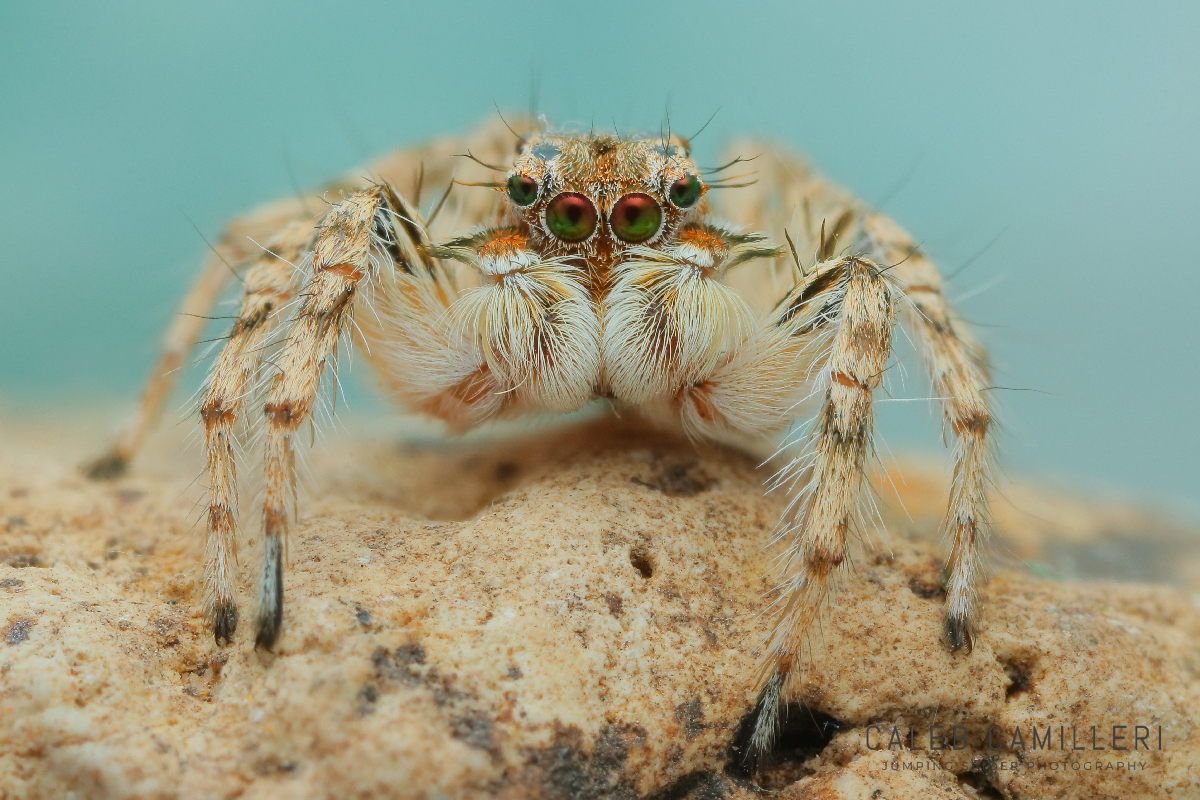
An adult male Plexippoides flavescens. This is a relatively large species for the United States, and both genders can jump impressive distances for ground dwellers! This male was found inside of an indoor light fixture.
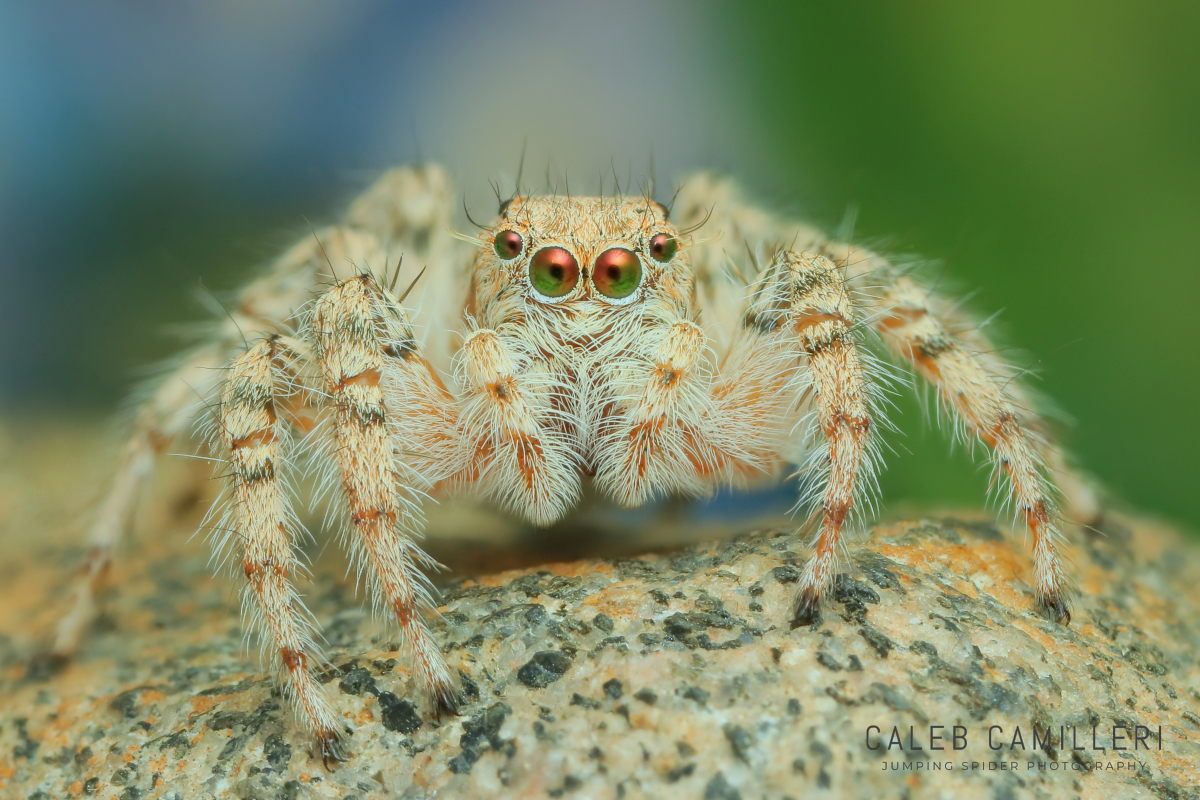
An adult female Plexippoides flavescens. This one was 12mm in body length.
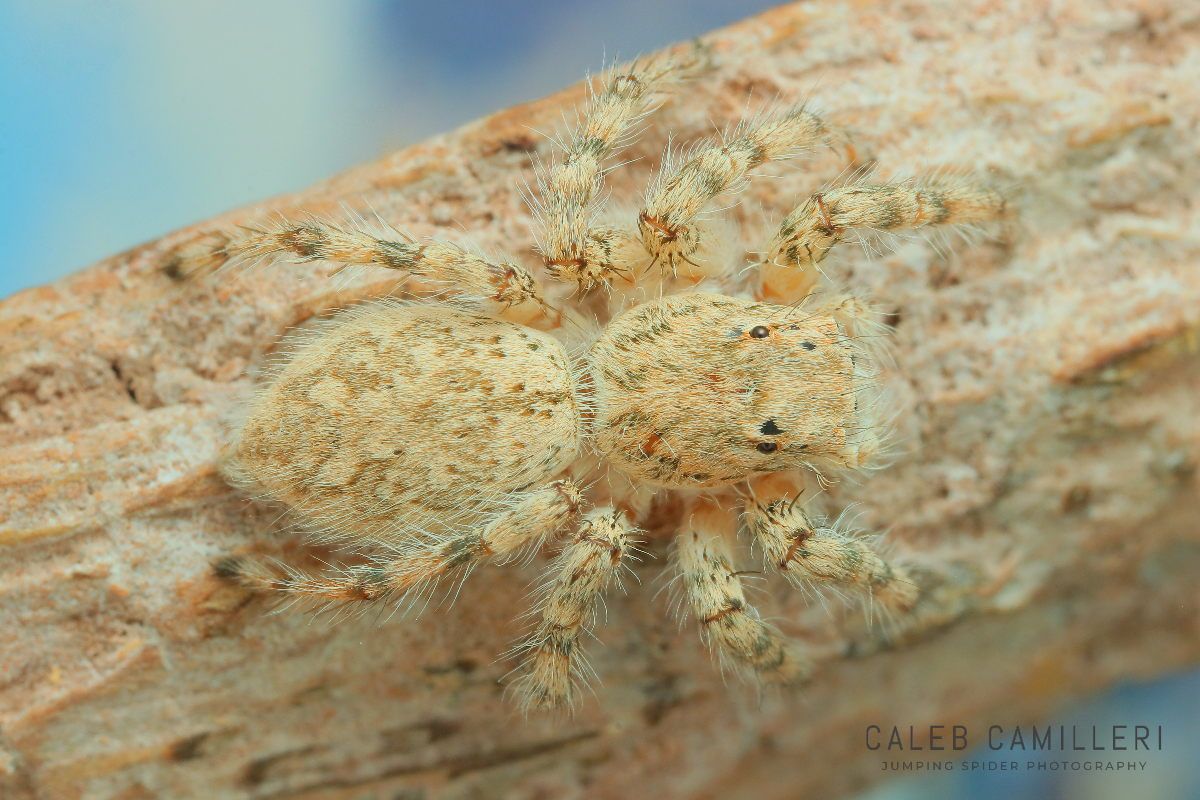
The same adult female, viewed from above. The inconspicuous patterning that this species has is probably pretty handy in the urban jungle!